
Hand-Blown vs. Machine-Made Glass Lamp Shades: Which Is Better?
2026-09-01 104When developing a new lighting product, choosing the right type of glass lamp shade is an important decision. Hand-blown glass lamp shades and machine-made glass lamp shades each have their own advantages, and the best option depends on your design, quantity, budget, quality requirements, and target market.
For lighting brands, interior designers, wholesalers and manufacturers, understanding the differences between these two production methods can help you make a better purchasing decision.
In this article, we compare hand-blown and machine-made glass lamp shades in terms of appearance, quality, consistency, customization, production cost, MOQ, lead time and applications.
What Are Hand-Blown Glass Lamp Shades?
Hand-blown glass lamp shades are produced by skilled glassworkers using traditional glass-forming techniques.
During production, a glassworker gathers molten glass onto a blowpipe and shapes it by blowing air into the glass while simultaneously rotating and forming it with various tools. Depending on the design, additional processes such as cutting, polishing, coloring, frosting, or sandblasting may also be required.
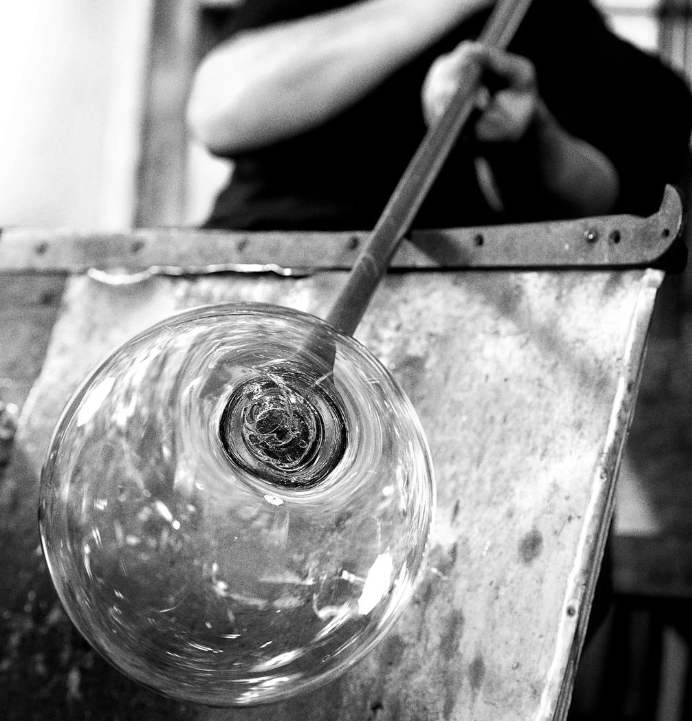
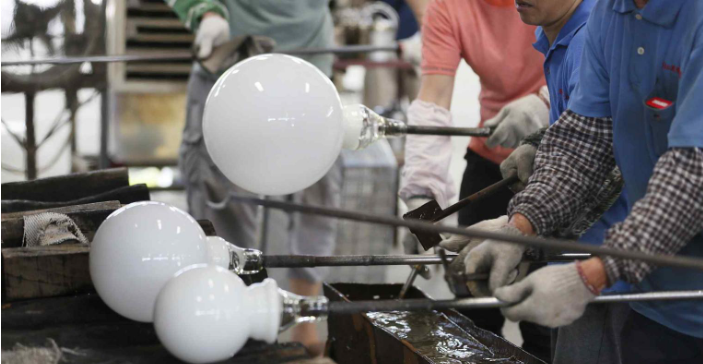
Because each piece is individually formed, hand-blown glass naturally has a certain degree of variation.
This is not necessarily a defect. In fact, many designers specifically choose hand-blown glass because these subtle differences give each lamp shade a more artistic and handcrafted appearance.
Advantages of Hand-Blown Glass Lamp Shades
1. Unique appearance
Every piece can have slight variations in thickness, shape, bubbles, or texture. These characteristics can create a premium handmade look.
2. Greater design flexibility
Hand-blown production is suitable for many organic, irregular, artistic, and decorative shapes that can be difficult to produce using standard machinery.
3. Premium positioning
Hand-blown glass is often used for high-end residential lighting, boutique hotels, restaurants, luxury interiors, and designer lighting collections.
4. Suitable for smaller production runs
For certain customized designs, hand-blown production may be more practical when the order quantity is relatively small.
What Are Machine-Made Glass Lamp Shades?
Machine-made glass lamp shades are produced using automated or semi-automated forming equipment. Molten glass is placed into a mold, and machines control the forming process to create the required shape.
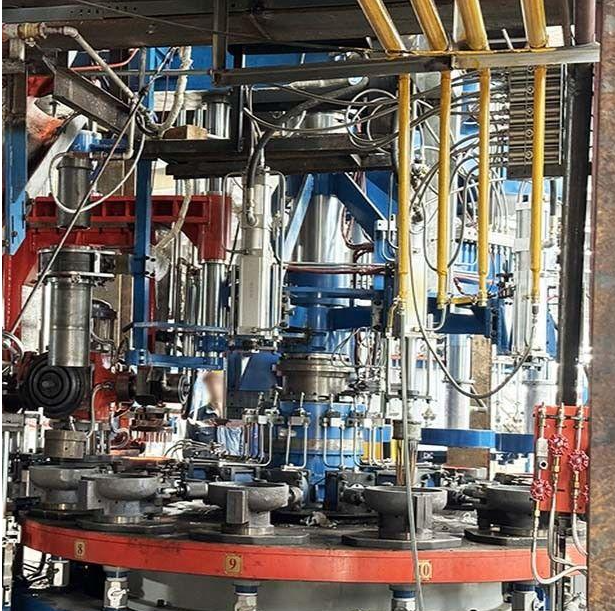
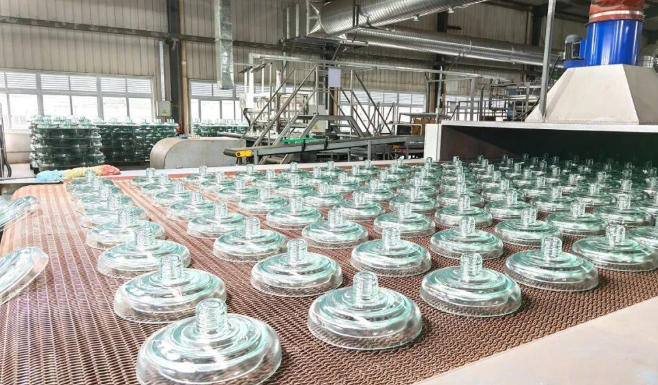
Machine production is particularly suitable for products that require high consistency and large production volumes.
Once the mold and production parameters have been properly established, the factory can manufacture large numbers of glass shades with very similar dimensions and shapes.
Advantages of Machine-Made Glass Lamp Shades
1. High consistency
Machine production can provide better control over dimensions, shape, and weight, which is especially important when producing large quantities.
2. Higher production efficiency
Machines can manufacture products much faster than traditional manual production, making this method suitable for large-volume orders.
3. Competitive unit cost
Although mold development can require an initial investment, the unit cost can become significantly lower when the production quantity increases.
4. Better for repeat orders
If a lighting company needs the same shade for multiple production runs, machine manufacturing can provide excellent repeatability.
Hand-Blown vs. Machine-Made Glass Lamp Shades: Key Differences
| Factor | Hand-Blown Glass | Machine-Made Glass |
|---|---|---|
| Appearance | Artistic and unique | Consistent and uniform |
| Production | Mainly manual | Automated/semi-automated |
| Design flexibility | Very high | Depends on mold and equipment |
| Consistency | Natural variations | High consistency |
| Production volume | Small to medium | Medium to large |
| Unit cost | Generally higher | Generally lower at volume |
| Mold requirement | Sometimes not required | Usually required |
| Customization | Excellent | Excellent for suitable designs |
| Lead time | Depends on craftsmanship | Efficient after mold development |
| Best for | Premium/design products | Mass-market/repeat production |
Which One Has Better Quality?
There is no simple answer that one production method always produces better quality.
Hand-blown does not automatically mean higher quality, and machine-made does not mean lower quality.
Quality depends on many factors, including:
Glass material
Production temperature
Mold quality
Forming process
Wall thickness
Dimensional tolerance
Surface finishing
Annealing
Quality control
Packaging and transportation
For example, a professionally manufactured machine-made glass shade can have excellent dimensional accuracy and surface quality. Similarly, a well-made hand-blown shade can offer outstanding craftsmanship and visual character.
For lighting manufacturers, the more important question is:
Which production method is appropriate for your product requirements?
Which Is More Cost-Effective?
For small quantities and highly customized designs, hand-blown glass may be more economical because it can sometimes avoid expensive tooling or complex molds.
However, when production volume increases, machine-made glass usually becomes more cost-effective.
For example, if you are developing 100–300 customized decorative shades, hand-blown production may be worth considering.
If you need thousands or tens of thousands of identical shades, investing in a mold and using machine production can significantly reduce the unit cost.
Therefore, when comparing prices, you should consider the total project cost, not only the price per piece.
The calculation may include:
Mold cost + sample cost + unit price + finishing + packaging + shipping
Which Is Better for Custom Glass Lamp Shades?
Both methods can be used for custom glass lamp shades, but they are suitable for different types of designs.
Choose Hand-Blown Glass When:
You need an artistic appearance
The design has an irregular or organic shape
You want handmade characteristics
The quantity is relatively small
Slight variations between pieces are acceptable
Your product is positioned in the premium market
Choose Machine-Made Glass When:
You need thousands of pieces
Dimensional consistency is critical
You need identical shades for multiple fixtures
You want a competitive unit price
The design can be effectively produced using a mold
You expect regular repeat orders
What About Lead Time?
Lead time depends on the design and production process rather than simply whether the product is handmade or machine-made.
For a new machine-made glass lamp shade, mold development can add time to the initial project. The manufacturer may need to develop the mold, produce samples, make adjustments, and conduct testing before mass production.
Once the mold has been approved, however, future orders can usually be produced much more efficiently.
Hand-blown shades may not require the same type of tooling, but production can be limited by the availability and skill of experienced glassworkers.
For this reason, buyers should always confirm the complete timeline:
Design → Mold/Tooling → Sample → Approval → Mass Production → QC → Packaging → Shipping
How Should Lighting Buyers Choose?
Before selecting hand-blown or machine-made glass, consider these five questions:
1. What is your order quantity?
Small quantities may favor hand-blown production, while large quantities generally favor machine production.
2. How important is consistency?
If every lamp shade needs to be almost identical, machine production may be the better choice.
3. What is the design?
Organic and artistic designs may work better with hand-blown production, while repeatable geometric designs are often suitable for molds and machine forming.
4. What is your target price?
If cost efficiency is a major priority, machine-made production can provide advantages at higher volumes.
5. What image do you want your lighting product to have?
If your brand focuses on craftsmanship, individuality, and luxury, hand-blown glass may better match your positioning.
Conclusion: Hand-Blown or Machine-Made?
Neither hand-blown nor machine-made glass lamp shades is universally better.
Hand-blown glass is ideal for designers and lighting brands looking for individuality, craftsmanship, organic shapes, and premium aesthetics.
Machine-made glass is better suited to projects requiring high consistency, efficient production, competitive pricing, and larger quantities.
For many professional lighting projects, the best solution is not simply choosing the cheapest or most traditional production method. Instead, it is about matching the manufacturing process with the product design, order quantity, quality requirements, and target market.
A reliable glass lamp shade manufacturer should be able to evaluate your drawings or samples and recommend the most suitable production method before you place an order.
If you are developing custom glass lamp shades, providing the manufacturer with the required dimensions, drawings, glass color, surface finish, quantity, and application will help them recommend the right production process and provide a more accurate quotation.

